Friday, May 4, 2018

Agility Equipment for Sale in NW Illinois

Last fall, I listed my agility equipment for sale, but then decided to think about it for a few months just to be sure.  Spring has come, and I know I will not be going back to agility, so here is the equipment I have left.  If you are interested in any of these items, email me at airedale49@yahoo.com


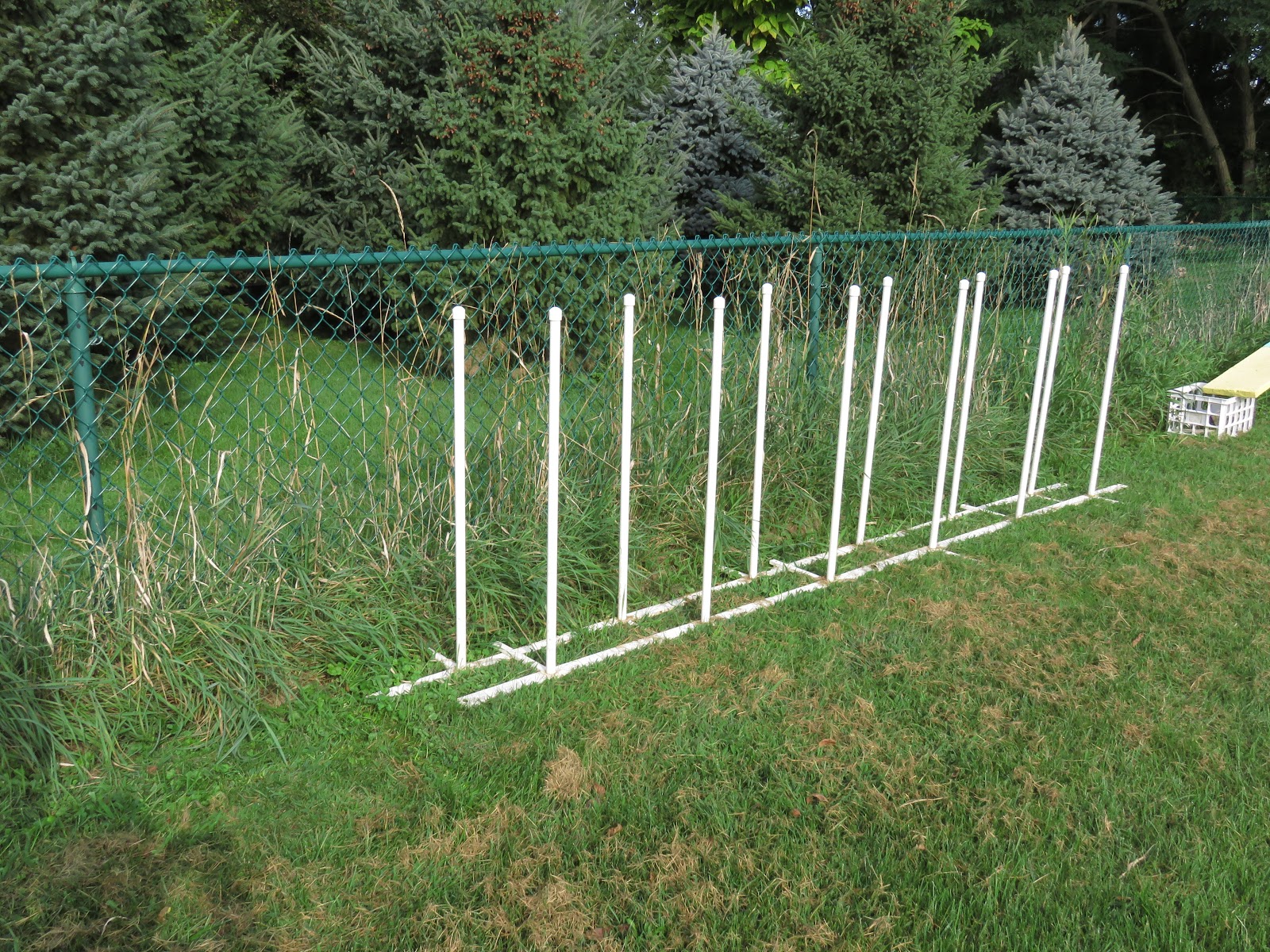
 SOLD Weave poles - $195  Set of 12 poles in three 2-pole sections and two 3-pole sections.


SOLD Teeter - 2"x12"x12' board on metal base - $75


TAKEN Wooden dog walk.  The two ramps are detachable.  Since the middle section is one piece, it will either require a large trailer or disassembly for transport.  Free. 


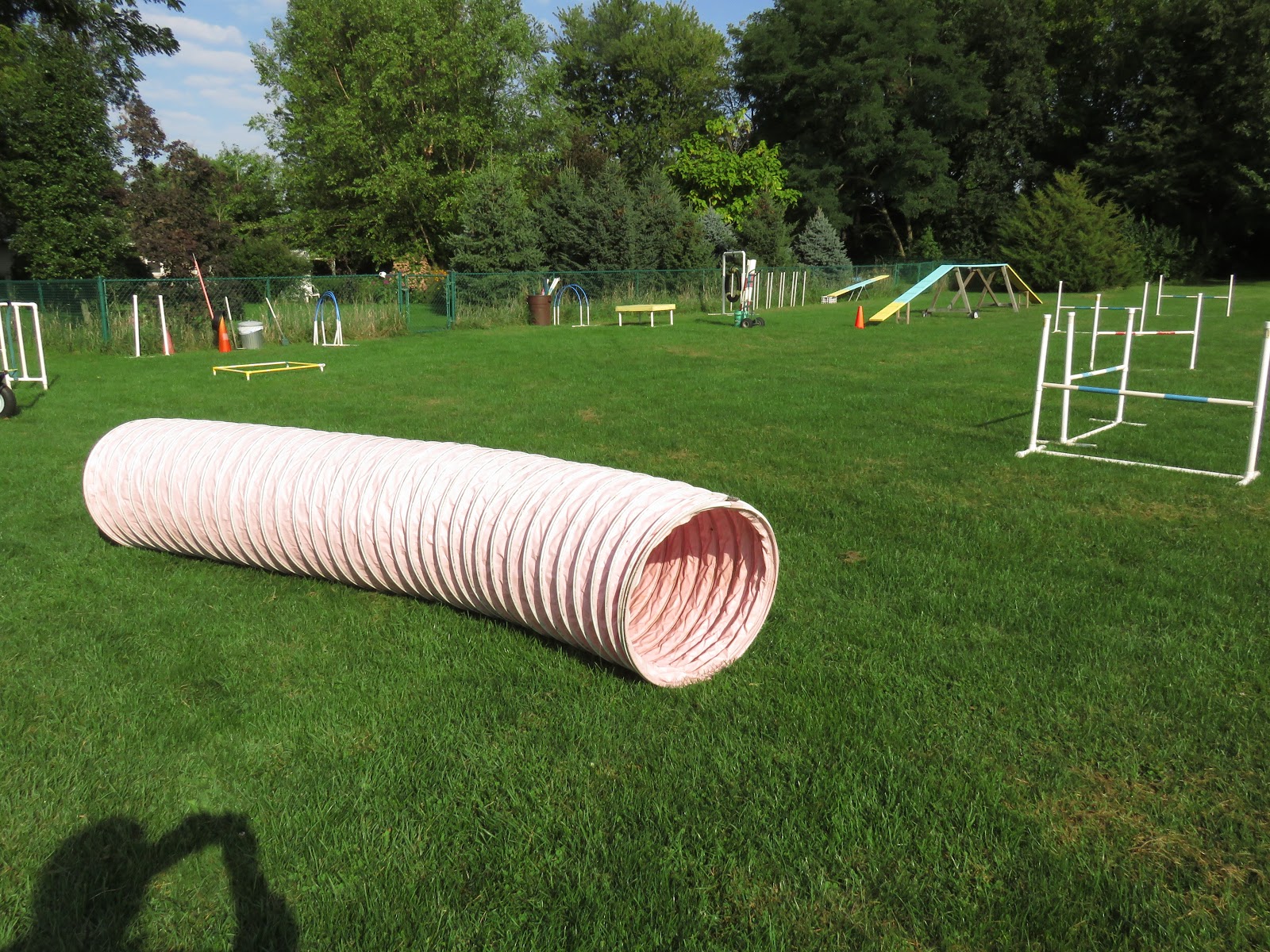
SOLD 20' NTI tunnel, 4" spacing - $75


SOLD 16' NTI tunnel, 4" spacing - $50


SOLD 10' NTI tunnel, 4" spacing - $25


SOLD 8 pairs of heavy duty tunnel bags (with or without the sand).  The velcro no longer works, but these tunnel bags have very strong handles, and I used nylon rope to secure them to each other.  $25 per pair or all 8 pairs for $150.


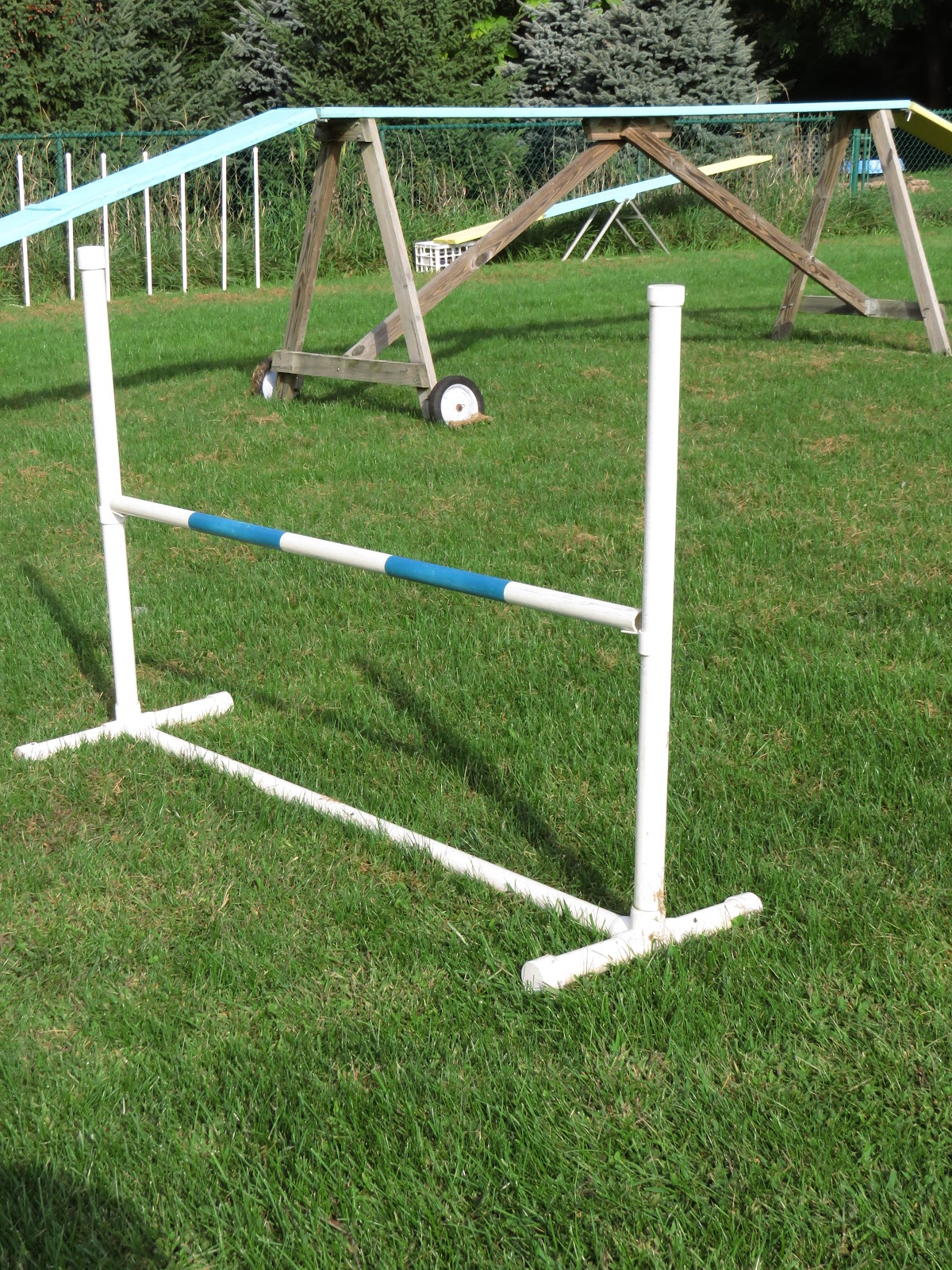
 SOLD Double jump standards.  No bars included.  $15


Triple jump standards.  The bottom left piece is loose from the frame.  It rests against the frame, but I have pushed it out for this photo.  $20


 SOLD Wooden long jump with four corner.  $30  I no longer have the four corner markers.  So this is just the four nesting pieces of a long jump.  - $20


Two 4' jump bumps. $5 each.


SOLD A frame with mover.  Sides are plywood, frame is aluminum.  $275


SOLD Nine metal tunnel holders with nylon cargo straps and 2 10" lag bolts anchors -  $20 each or all nine for $150


SOLD Six 4.5' wingless jumps with one bar each.  I used sliding jump cups for safety-one pair per jump.  $5 per jump


Seven 4' wingless jumps - Sorry I only have four bars.  I used sliding jump cups for safety-one pair per jump.  $5 per jump w/bar; $3 each for the jumps without bars.  $25 for all seven.


Homemade break away tire.  The break away feature was made with two rare earth magnetics. - $45


Home made table, approximately 16" high. - $15


Saturday, June 24, 2017

Working on the 2017 IFCS WAC Individual Jumping Course

I decided to tackle this year's IFCS WAC Individual Jumping course.  Esteban Fernandezlopez analyzed the run-off run of Stanislov Kurochkin for the members of the Bad Dog Agility Academy, and I wanted to see if I could get where I needed to be on this course.  You can see Kurochkin's run here.

The red squares represent three critical handling positions.  A is for the threadle from 6 to 7,  B is for the threadle from 10 to 11, and C is for the #16 tunnel.  We worked on the course in sections throughout the day and then put it all together.


Friday, June 23, 2017

In May, Will and I went to a UKI trial judged by Eric Burknap.  There were three tunnel challenges in his courses that I wanted to set up and work on at home.  It took me more than a month to get around to it, but we finally had a chance to work on them today.  Here are the sequences we worked on.  Each contains the original challenge from the trial, and one of them contains an additional tunnel challenge.  Have fun.


Saturday, December 3, 2016

Honing Our Long Jump Skills - Part 1

I joined Justine Davenport and Jessica Patterson's Shape Up or Ship Out group.  I was able to set up some of the courses from the first two lessons, but as winter settles in, I will have to content myself with just working some of the drills and skills when weather permits.  On the bright side, I'll have no shortage of courses to choose from come spring.

On the first course I set, Will had problems with the long jump.  The sequence was such that he ended up slicing it just a bit too much.  I decided to haul out my long jump today and work on some angled approaches and a right angle exit line.  Here's what I came up with:


We worked through the top set of sequences today.  (The bottom
set is simply the mirror image for us to work when weather permits.)

Tuesday, October 18, 2016

Tackling A Championship Course

I set up Tamas Traj's FCI Agility World Championships 2016 Team Agility Large and gave it a go with Willie.  As part of the Bad Dog Agility VIP program, Sarah Fernandezlopez analyzed Susan Garrett's handling of this course, and I felt it was something we could take a stab at.  Click here to see Susan's run.


Notes on Our Attemps:

I tried to run this as Susan Garrett did.  I didn’t know if Willie could handle the long LO, but he had no problem with it.  However, my timing for the teeter was late every time.  The first time I was so late, Willie ended up in the #14 tunnel.  I re-watched Susan’s run and discovered that I needed to place my BC after the teeter not before.  That will allow me to take less of a LO and draw a better line to the teeter.

#7 requires support as I run by or Willie will just come with me and take #8.

I wasn’t really expecting the turn out of the weaves to the tunnel to be a big deal.  Unfortunately, I only said “tunnel” on our first attempt.  (I would have sworn I said “switch, tunnel,” but the video clearly shows I didn’t.)  A directional is needed here since the tunnel is not in Willie's line of sight.

I thought getting to the other side of the DW after #12 would be a real foot race, but it was actually not hard.  (Susan had to resort to a RC at the #14 tunnel, I was able to do a BC.  If my #13 had been a wall instead of a panel jump, I might well have had to hang back to ensure Will took the wall and then use a RC at the #14 tunnel.)

The second time through, I tried to push for a BC between 20/21 and failed big time.  Should have just used a RC like I did the first time.  (SG managed to do a FC!!!)


P.S.  We ran this again later in the day so I could try blind crossing the teeter exit.  Much to my surprise that proved to be a little slower for us.

Monday, May 23, 2016

Contact Practice and a Little More

Because contact equipment is so heavy, I absolutely hate setting up standard courses.  However, I did want to spend some training time this year on improving Willie's A frame and dog walk performances.  The other day, we ran a course that had two challenges we couldn't meet with my limited mobility.  The first challenge was AF to the tire, and the second was table to the weaves.  Here's a photo of the section of course in question.


The approach to the AF is from the left, and it is a fast approach from a chute.  I layered the jump and table and stopped between the table and the tire before releasing Will to the tire.  Despite out-stretched arm and foot, Will took the table.  The only way I could get him to take the tire was to actually take a step toward it as I released him, but I'd really like him to also be able to take it with a verbal and my static body cues.

The second problem was the weave poles after the table.  I wanted to layer the tire so I could get a head start on the DW which is off-screen to the right.  What I got was a lot of barking and spinning. I was really, really surprised by this, since I thought Willie's weave entrances were pretty much rock solid.  Apparently, this is a little varation we will have to work on.

I designed this course for working on these two issues, plus our contact performances.


I ended up adding a couple of jumps so that we could go from AF to DW.  The teeter is rather a dead end, but since its not really as big a problem for us as the DW and AF, I'm okay with that.  I suppose if the teeter were a bigger issue, I could put it where the AF is on this course.  Here's one sequence we ran this morning.

Note Taking

Over the years, I have taken reams of notes and analyzed hours of video often with either written comments or voice over.  The big problem is that I almost never go back and review my notes.  For a short time I even tried two different spreadsheets for tackling the problem.  One spreadsheet was for categorizing types of errors (contacts, failing to support an obstacle until Will was committed, late cues, etc.).  The other was an attempt to make comments on different types of exercises we tackled.  The second spreadsheet turned into way too big a project and was basically no better than taking notes and storing them in the computer.

I also took a stab at creating my own flashcards to serve as reminder notes.  For example:


The process of creating the flashcards was kind of tedious though, and I wasn't real good about keeping them up.

A couple of months ago, I came up with a solution that was somewhat similar to the flash cards, but seemed to be a little more useable for me.  I create a Word document that includes a course map and a few notes, and, often times, my handling path.  I then save it as a PDF file and make my annotations and comments using the comment and text capabilities of the free Adobe PDF Reader.  Here's an example:


  Once I made my notes, I save the file with the original title plus "annotated."  By adding the same word, "annotated," I can do a document search and review all the notes I've made or copy them to my Nexus so I can review them when I have a spare moment.

What I really like about the comment markers is that you can place them at the key points on the course, but you don't obscure the course with the written word.

Wednesday, April 27, 2016

A New Challenge

Eight days ago, my right knee flared up so badly that I had to use a walker in order to get around the house.  Thankfully, 24 hours later I was able to hobble around without the walker.  Then three days later I was awakened by a burning sensation in my left buttock.  The initial diagnosis was that my piriformis muscle was spasming and affecting my sciatic nerve.  However, two days ago a rash appeared and I realized I probably had shingles.  My self-diagnosis was confirmed, and I started on an anti-viral yesterday.  I also started physical therapy for my knee yesterday.  Let's just say that I'm not a particularly happy camper at the moment.

Last Sunday, I had a break from both my knee pain and the shingles attack, and I was able to take Willie to a NADAC trial.  My only goal for the day was to finish the day and still be able to drive home.  That goal was met, plus we managed a 5-pt Q in Elite Regular and our second Novice Tunnelers Q.  However, I really felt our non-qualifying Elite Jumpers run was our best run of the day, so that's the one I posted to YouTube.  (Watch closely and you will see that the bar comes down when I turn my head to look at the final two jumps.)


My YouTube user name is Whitewaterwoman, a name I chose many years ago when I was a whitewater canoeist.

Nantahala Falls, North Carolina

Wildcat Rapids on the Vermilion River, Illinois

These photos are about 20 years old, and I was about 65 pounds lighter and in considerably better physical shape than I am today.  I can't do anything about my age, but I decided that I certainly can do something about the pounds I have accumulated over the years.  Hopefully, physical therapy will enable me to resume walking and hiking so that I can also work on improving my level of physical fitness.

Last week, I promised myself I would start eating better.  It's been five days, and so far I'm doing good.  The biggest problem with my diet was that it was way heavy on refined carbs, including three or four cans of Cherry Coke a day--I've cut that to one or none.  The other problem was that it was way too light on healthy foods.  I've begun collecting and preparing recipes that are much healthier than what we were eating.  Here's one I prepared the other day.

Wish me luck with my new challenge.  And if you have any favorite recipes, feel free to post a link in the comment section.


Wednesday, April 13, 2016

Why?

For me, the most difficult thing about bonus line work at this point is figuring out what verbal cues I need to give.  I think I'm doing a fairly good job of drawing the line, but when your dog is heading  away from you, verbals become essential for alerting your dog to what you want.  Today, we tackled the Open version of yesterday's Jumpers course.
 

Today, the biggest problem I encountered with both Belle and Willie was getting from 5 to 6.  I tried "go," get out," and "switch," all to no avail.  This was really weird since the opening on the yesterday's Novice course was exactly the same as today's Open course, and 5 to 6 was definitely not a major issue yesterday!  The solution to my problem was to use a "come" command as the dogs were closing in on 5.  It worked like a charm, but why it was necessary today and not yesterday was a mystery to me. 


The only other consistent issue I had today was at 3 with Belle.  If I said "switch" as she was crossing 3, she switched right then and there.  I had to delay my switch cues until she was within a stride of 4.  Since it was absolutely necessary to do this with Belle, I decided to also do it with Willie.  When I compared clips from yesterday and today in Coach's Eye, I discovered that the delayed switch cues were responsible for Willie and Belle defaulting to the tunnel if I did not say "come" as they crossed 5.

Tuesday, April 12, 2016

Switch vs. Go Back

The weather has finally turned nice here in the Midwest, so I thought I'd set up a jumpers course and do some bonus line training.  Here's the course we tackled today:


 In our morning session, I made several mistakes.
  • Trying to work the course from behind the red line.
  • Using a moving start with Willie.
  • Using a switch command at #9.
Without a doubt, our biggest problem was #9 where Willie gave me all sorts of unexpected responses to my "switch" command.  When I sat down and watched the video, I could see Willie's point.  I wanted him to turn away from me and take #10.  However, from Willie's point of view there is really no change of direction involved.  Moving from #3 all the way to #10 involves moving along one big counterclockwise circle!  When I said "switch," Willie did his best to switch off the circle he was on.  He tried several different options, almost all of which involved turning to his right.

The "turn" from #9 to #10 is actually a spot where "go back" is the appropriate command.  Luckily, we have worked on that a little bit, so it wasn't totally foreign to Willie when I tried using it on this course.

In the morning session we used a running start, and Willie failed to heed my "turn" command for the right turn at #2 several times.  I decided he probably didn't need quite so much momentum approaching that first turn, so for the afternoon session, I had him start from a sit stay.

The morning session got pretty messy and ugly, so I decided to take the whole experience down a notch and use the green line for our bonus practice.  It allowed me to handle the course much more calmly and confidently.  I'm really looking forward to tackling the Open course tomorrow.


Sunday, December 27, 2015

Article Indication

Willie and I have worked on quite a lot of slopes since the last post, and I think he is finally getting the idea that sometimes the trail just disappears and if he casts about he can pick it up again.

He's doing pretty good at finding the articles I drop on our tracks, but he tends to acknowledge them and then return to tracking immediately.  I thought I'd do a little work today on increasing the value of indicating the articles a little more strongly.

This morning, the wind was out of the north, which made it ideal for working in the hay field to the south of our property.  The first track I laid was a straight 300-400 foot leg with 12-15 articles dropped on it.  Unfortunately, I didn't think to use a leash instead of a long line, so it was not a very effective training session.  Willie downed when I told him to for each article, but unfortunately since I had no tension on the line, he turned and faced me first, covering the articles with his butt!

Then, I laid a 50 foot track for Belle using six articles and no line.  She was a very good girl--downing at my command at each article with her front legs on either side of them.  I came back out with Willie and tried two shorter tracks using a six foot leash instead of a long line, and I was really pleased with the result.  This time, he downed facing the articles!  Also, instead of tossing his reward to restart him tracking, I simply delivered it at the source (i.e., the article he was indicating), and then told him to track again.

Since we're expecting a winter storm tomorrow with strong winds, we went out one more time in the afternoon.  The winds were a little stronger and more variable.  I laid a 100 foot track with eight articles for the dogs to find.  Here's the video.  Interestingly, Belle did a better job orienting to the articles when she was off-lead this morning.  I can't wait for another mild day to see if this results in Willie giving a stronger article indication on a "normal" training track.


P.S.  12/29/2015  I laid a 300' track on the snow with two white articles.  Willie did a great job of finding them and he also brought them to me.  Bringing the article to me interrupts the flow of Willie remaining on track, so I think we will repeat Sunday's exercise a few times and see if I can get Willie to switch to downing for his article indication.

Thursday, December 10, 2015

Dogs Don't Generalize

Winter is here and we're not doing a lot of agility.  I was hoping to actually not do any agility for a month or two, but so far the nice mild weather keeps me going back out to the field with Willie.  We are taking a two-month break from trialing though.

I enrolled as an auditor in an online nose work class, I've been spending time every day working with Belle and Willie on the foundamentals.  One thing I really like about this class is that it tackles the dog's alert behavior from the beginning.

I'm also doing some tracking with Willie.  We hadn't done any in ages and it's not like I really know what I'm doing.  We're just out there to have fun.  Monday, I set a difficult track around one of the buildings on an abandoned campus.  Willie was absolutely awesome.  So Tuesday, I had my husband set up an easy track in the agility field and discovered DOGS DON'T GENERALIZE!  Willie was pretty clueless that if he followed Ed's track there were goodies to be had.

Since my husband is a very unwilling participant in tracking activities, I enlisted the aid of my grandnephew.  On Tuesday and Wednesday, we laid short, straight tracks in the field so that Willie would get the idea that it was possible to track someone other than Mom.  I had to resort to having Dakota drop hot dogs on the ground, but Willie did get the idea.

It's real windy today so, I took Willie, Dakota and Dakota's cousin, Shane, to the park where there is some shelter from the wind.  We warmed up by having Willie track a new person, Shane, and he nailed it!  Next, we went up (and I do mean up) into the woods, and I had Dakota lay a track with three articles, plus the second glove, and no food.  Will did a pretty good job with this track also.  He found all three articles, and did a good job of remaining on track until the last leg.  For some reason he kept going off the trail on the last leg.  Perhaps, the track was a little too long for him at this stage.  Or perhaps, the combination of wind and a downhill slope made this leg more difficult.  I did observe on Monday that the only spot on our track that gave Will a problem was when the tract went down a steep slope.

Saturday, October 24, 2015

Weave Pole Proofing

Although I know better, I took Willie's weaving skills for granted and have not periodically worked on difficult entries and exits.  Yesterday, my chickens came home to roost and Willie had WP problems on 3 out of 3 runs!  I did a web search last night and came up with two good videos.  The first is by Jenny Damm.  Not only is her proofing extreme, but she also demonstrates the phenomenal distance ability of her dogs.  The second is probably a little more practical for most of us.


Here are the drills from the second video:

When I'm working on WP proofing, I generally use 4-6 poles so that we can get in more reps working on entries.  However, I also decided we would do some limited work with a full set of weaves and I designed two sets of exercises inspired by the Terry Elger courses we ran yesterday.


Here is a set up I designed after having problems with a very difficult weave entry in class last December.

Here's a link to video of me working through these exercises with Willie.  (It will take you to directly to the exercises and skip the lengthy intro.)

Finally, here's a link to a reprint of an article Rachel Sanders wrote for Clean Run, "Nail Down Your Weave Entries."

Tuesday, June 30, 2015

Anatomy of a Gamble

A FaceBook friend posted this gamble from a recent ASCA trial.  She and her dog were the only team to successfully complete the gamble.  When I looked at it, I thought getting the correct end of the tunnel had to be next to impossible.  However, she answered that several dogs got the correct end of the tunnel, but then either took the AF or failed to take the #4 jump.


I decided to set up the gamble and see how close we would come.  The big question is whether to approach the gamble DOR or DOL.  There are two major problems involved with starting DOR.  First, the handler will in all probability end up fairly close to the gamble line when she sends her dog over #1 to the tunnel.  Because the tunnel is only 15' and quite curved, there will be no opportunity for the handler to step back from the line since her dog will see her doing so and be drawn to the AF.  This means that the handler has no way to apply physical pressure to her dog's line when he exits the tunnel.  Additionally, because the handler is already so far down course, the AF will block her from her dog's view when she starts to move toward the finish.

By entering the gamble DOL these problems are neatly avoided.  The handler will be behind the tunnel exit and have the opportunity to move away from the gamble line without her dog seeing her.  When the dog exits the tunnel, she will be in a perfect spot to apply pressure on the dog's line so that he will move away from the AF and take the #3 jump.  Additionally, because the handler is behind, she can maintain pressure on her dog's line until he has taken #4.

So, did it work for us?  Willie carried it off beautifully.  His speed and stride took him to the correct tunnel entrance and he didn't have much trouble understanding what I wanted him to do after the tunnel.  Belle, on the other hand, ducked into the wrong end of the tunnel.  However, she had no difficulty with the last two jumps.


P.S.  An important aspect of the gamble is being in a good spot to begin the gamble when the horn sounds.  I didn't set up the entire course, but if I were running this at a trial, I would finish up my closing with the teeter, the jump at (68,40), and the weave poles back to back.  Hopefully, the horn would sound when we were doing the weaves for the second time.

Sunday, June 21, 2015

Just a Little Hustle

Qualifying runs have been eluding Willie and me.  So far we have 10 Excellent/Master Standard runs and only 3 Q's.  Ex/Mas JWW is even worse.  Nine runs and no Q's!  Among other things, what was killing us in JWW was being unable to complete a long closing line without incurring a refusal due to a spin.

I was a participant in Tracy Sklenar's online Learn Your Dog Camp 2015 and she was quickly identified my problem with the long-line closings.  I was trying to send Willie on ahead of me with the big arm fling.  What I should have been doing was tucking up my arms and sprinting toward the finish albeit many feet or yards behind Willie.  Of course, I didn't get a chance to try this out last weekend because there was not a long-line closing on any of the seven courses we ran.  However, when it crops up again, I will be prepared.

After going 1/7 last weekend, I decided it was time to start setting up two or three JWW courses a week and seriously striving to get them right the first time.  So far we are 2/2.

This morning's course was designed by Dan Butcher, and I was very pleased that we nailed it the first time.  Additionally, I was very proud of the timing of my send and run at the tunnel and at #17 and Willie's ability to read the forced front cross on the run at #10.  My biggest handling error was failing to reconnect with Willie after my BC between 17 and 18.

One of the greatest downsides to training alone is trying to improve your handling.  Video helps me to see when something is going badly, but I may not be able to discern why or how to fix it.  Even when things go well, there are probably things I could do even better, but if I knew what those things were, I would have done them in the first place, n'est pas?  

I was fortunate enough to find video of someone running this course at trial, and she did a wonderful job of handling her dog.  Actually, that wasn't too surprising since it turns out she is a handler of world team caliber.  I tried not to get too carried away comparing our run and hers, but I did come away with several handling choices to ponder.  (Left to my own devices I probably never would have thought of any of them.)

1.  Right off the bat, the WT handler gained almost a full obstacle on us by sending her dog to the second obstacle and taking off for a FC on the landing side of #3 so she could handle DOL through the weaves.  (I stuck close to #2 and RC'd #4, a much more leisurely approach.)

2.  At #10, I did a forced front cross and then RC'ed 11.  This meant I had to handle 12-15 from behind.  The WT handler sent her dog to the backside at 10 and ran along the bar on the landing side, picking her dog up on her left.  She then made a beeline for a FC on the landing side of 12 and was able to tighten her dogs turns at 13-15 very nicely.  That savings in yardage put her dog another whole obstacle ahead of Willie.

3.  Additionally, the WT handler chose to handle the weave exit with a grab.  I used a FC close placed close to 6.  Her dog had a much tighter turn out of the weaves, but her dog is also a 16" Sheltie.  The only way to know if it would improve our time is to try it.

Both 1 and 2 demonstrate the advantage of getting ahead of your dog in terms of saving yardage.  However, whether or not it is always possible to get there is another matter altogether.

Willie and I went out in the afternoon and gave this another go.  The different opening and the weave exit grab presented no problem, and they definitely saved us a few yards.  I was able to easily push Willie to the back of #10 and pick him up on my right.  However, my FC before #13 was late and I was in Willie's way.  We ran the course one more time, and instead of trying for the FC on the take off side of #13, I merely got closer to the landing side and directed Willie from there.  (Interestingly, his turn from 14 to 15 was tighter when I was further away, although overall this section benefited from me being closer to the action.)  With just a little bit of hustle on my part, we shaved almost a whole second off of the run.

Monday, May 4, 2015

A Very Challenging Course

Wow, I can't believe how long it's been since I've posted anything in my blog.  I've done most of my analysis in video format and posted it to YouTube.  However, a couple of weeks ago, I had the pleasure of running some challenging courses designed by Richard Kurzawa.
Friday's JWW course was the most difficult of the courses we ran, and I had the chance to set it up today to see if I could improve my handling choices.

The first challenge for us was the widely spaced 4-jump serpentine in the opening.  Even indoors on sports turf I don't realistically think I can beat Willie down this line.  In heavy grass, I know absolutely it's not going to happen.  Additionally, there are places later in the course that I am going to need any energy I might expend trying to stay ahead of Willie in the opening.

Second Challenge:  The backside at #9.  This is pretty easy for us if I go through the gap between 8 and 10.  However, going through that gap makes it harder for me to get back to 10 in time to ask for collection with a timely FC.  So I opted to follow the green line after sending Willie into the tunnel.  I didn't get a chance to try this at the trial because our train derailed after #4.  The first time, I tried it today, I stopped one stride too soon and Willie came in toward me and took #9 from the wrong side.  After that, we had no trouble getting the backside.  However, despite having all the time I needed to execute a FC at #10, I was still late, and Willie’s path there was very wide!

Now, for the really evil part of this course.  12 to 13 calls for collection and a tight turn.  At the trial, it was amazing how many handlers opted to do a FC between 12 and 13.  For the most part, it was not a good option.  At the trial, I did a FC fairly close to #9 and ran DOL, hanging back so I could RC between 11 and 12.  Unfortunately, I was late with that RC and Willie took #13 from right to left and when I RC’ed #13, he knocked the bar.  My next RC was also late and Willie went over #1 before turning back to the weaves.  Clearly, I needed a better plan for 10-15.

Layering 10 and sending Willie to the backside at #9, allows me to do my FC on the landing side of #10 and to run DOR, which puts me ahead for the technical stuff that is coming up.  (Executing the FC on the LS of #9, pretty much prevents me from getting far enough ahead to do a second cross, so I'm stuck running DOL.  This puts me behind when I need to be as far ahead as I can manage.)

After working through 11-15 a couple of times, it dawned on me that if I could get far enough ahead at #13, I could reshape Willie’s line just enough to make the off-course jump (#1) a less viable option.  I finally decided to try using a reverse spin at #13.  This effectively communicated the turn and allowed me to keep moving.  It worked just fine and enable me to get to the landing side of #13 in time to alter Willie’s path just enough that a RC at #14 took him to the weaves.

Here's the video.  The first clip is our trial run.  The second clip is our successful run at home.  And after that, there are several short clips showing how we worked out the handling.

Monday, December 29, 2014

Taking Stock

Almost the end of another year, and a perfect time to take stock of how Willie's training is going.

Positives:
1.  His distance skills are excellent.
2.  Jumpers courses are our forte.
3.  Great start line stay.
4.  Fast and willing agility teammate.

Needs Work:
1.  When I stop Willie to rework something we messed up, he can get into quite a state.  This should sort itself out as long as I remember to never let it slide in my desire to run a particular course or sequence.  Self-control is imperative for such a fast dog.

2.  Contact/tunnel discriminations, and especially DW/tunnel discriminations need to get more work.  Additionally, I really should invest some time and effort into training an independent DW contact.  Right now, it is very much dependent upon me stopping.  I don't have to be close to the DW, by I do have to stop.

3.  Given Willie's AF performances this weekend, I think we should take a break from any running AF training and just stick to a 2o2o performance.  Once Willie has an independent 2o2o AF (which he does not at this point), we can try to sneak in the back door to a running AF by working on a fast release and then an early release.

Without a natural stride that carries a dog into the yellow, it requires a lot of reps to get a dependable running AF.  We've worked at this for more than 10 months, and I think it is time to put it aside both for Willie's physical well-being and so that what is expected at trial is what he is accustomed to doing in practice.

4.  Timing.  This one is mine to work on.  Relax and go with the flow.  Just remember the flow is pretty darn fast with this particular dog :-)

Here with all of its warts is footage from our last trial of 2014.  The second day of this trial went better, but there is no video.

A New Skill to Train


Today's Regular courses featured a barrel tunnel trap that I have not seen before.  Here's the Elite course map.  To me it seemed like the tunnel was pushed to the right as I indicate and the barrel a little bit to the left.  In any event wrapping the barrel to the #4 hoop was not an easy feat.  On the Novice version of this course, Willie was to the mouth of the tunnel in both Round 1 and Round 2.  Novice Rd 2 did had the dog coming straight toward the barrel from a couple of jumps.  The judge kindly removed the tunnel under the AF, but then replaced the #13 tunnel with a barrel.

Needless to say, I will be setting up my barrel with an attractive off-course obstacle behind it as soon as it gets nice enough to play outdoors again.

Here's one set of exercises I dreamed up.


Course Challenges

Although I've been working with Willie on some NADAC courses, I really wasn't planning to do a whole lot of NADAC trialing. However, we went to a NADAC trial this weekend, and I was very surprised to see some pretty challenging courses.

For example, here is the Elite Chances course from today. The tunnel/AF discrimination took its usual toll, but the really tricky part of this course is directing your dog from 7 to 8. While running the 4-7 loop, the dog is on his right lead.  If the handler goes beyond the plane of 7 in order to support 5 and 6, then her return path will cause her dog to switch leads at 7 and turn toward the #4 hoop.

Two or three teams were successful with this path in Elite and Open, but with one exception, it wasn't pretty.

A smoother, less stressful way to get your dog from 7 to 8 is to take a deep breath and not rush toward the line.  Pace yourself so that you keep moving toward 5 without coming up against the line.  Then support your dog's line to 6 from the "x" or from not more than a couple of feet to the east of it.  This will either leave you in a perfect position to pressure your dog's line from 7 to 8 or allow you the chance to step back to "x" without cuing a lead change.


Saturday, December 6, 2014

A Difficult Rear Cross

On Monday, Willie and I ran a MC Standard course in class that featured this opening:


We haven't worked all that much on rear crossing the weaves, and this particular RC is going against the direction that Willie is traveling in the weaves.  Since getting this right is a training issue and not a handling issue, I opted to start at #4 on our next turn.  Then I went home and created a plan to work on this skill.

RC Weave Pole Entry

We'll start this exercise with 6 poles and I'll decide whether to work with 12 poles as we get each step or work through all four exercises before starting over with 12.

The first stage will involve moving the position of the jump from the black position to the red.  Then I'll return the jump to its starting position and work on increasing the angle of the weaves away from the tunnel.  Once Willie can handle the RC with the weaves angling away from the tunnel, I'll start moving the jump toward the red position.

The final exercise will be as shown at the bottom right, where I've added a second jump to approximate the challenge we faced this morning.

Here are the videos of our work on this sequence: